
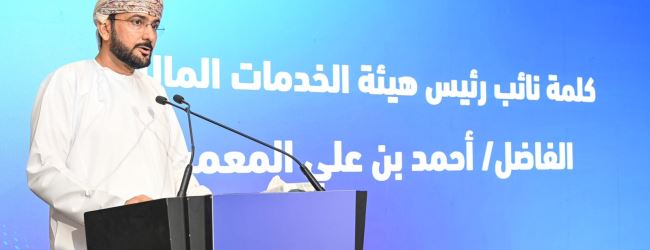
Ahmed bin Ali Al Mamari, Vice Executive President of the Financial Services Authority (FSA), said that artificial intelligence (AI), data analytics and remote sensing technologies have fundamentally transformed risk management practices. He noted that the insurance sector is increasingly relying on accurate data and predictive analysis to support more efficient decision-making, contributing to the development of insurance products and enhancing the quality of services provided.
Al Mamari made the remarks during the opening of a workshop titled "Flood Risk Analysis Using Satellite and Drone Technologies", hosted by the FSA in collaboration with Oman Lens and Esbaar on Tuesday, 28 July 2026. The workshop brought together representatives from the Civil Defence and Ambulance Authority (CDAA), insurance firms and brokers, as well as a group of specialists and experts in advanced technologies and risk-management.
The workshop reviewed the latest technologies and innovative solutions used in flood risk analysis and to strengthen the insurance sector's readiness to utilise satellite and drone technologies for data collection, analysis and damage assessment. It also highlighted how these technologies can improve underwriting and insurance claims settlement, thereby enhancing the sector's efficiency and its ability to manage natural risks.
Al Mamari said that rapidly changing climate conditions underscore the need to shift from responding to disasters after they occur to anticipating risks, preparing for them and mitigating their impact. He stressed that adopting modern technologies has become a strategic imperative for enhancing institutional preparedness and strengthening the efficiency of risk management systems.
He added that the exceptional weather events experienced in the Sultanate of Oman in recent years have emphasised the need for more accurate tools to assess natural risks and greater reliance on modern technologies for data collection and analysis. Such technologies, he said, enhance the speed of response, improve the accuracy of damage assessments and support decision-making based on reliable and precise information.
In his remarks, Eng. Younis Al Siyabi highlighted the importance of harnessing Fourth Industrial Revolution technologies to assess residential areas and develop geospatial plans. He said these technologies strengthen the ability to predict natural disaster risks proactively, reduce their impact on residential communities and private property, and help protect lives from the effects of extreme weather events, including heavy rainfall and tropical systems. He also stressed the importance of making effective use of available data and analytics to support planning and informed decision-making, thereby enhancing the preparedness of relevant authorities and improving risk management capabilities.
Meanwhile, Azzan bin Abdullah Al Mamari, Commercial Director at Oman Lens, said that the workshop showcased the latest practical applications of satellite imagery and drone technologies in flood risk analysis. He explained that these technologies provide the insurance sector with accurate data to improve asset valuation, enhance underwriting efficiency and accelerate damage assessment, in line with Oman’s digital transformation agenda and future vision.
He added that these technologies also play a significant role in supporting the work of the Civil Defence and Ambulance Authority in emergency management, urban planning and the protection of critical infrastructure, strengthening integration among national institutions and improving preparedness for severe weather events and natural hazards.
The workshop featured a series of technical presentations and papers, together with an interactive simulation demonstrating practical applications of modern technologies in flood risk analysis. The sessions highlighted their role in advancing risk-assessment practices and improving decision-making within the insurance sector.
The workshop ended by reaffirming the significance of continuing to adopt modern technologies in developing the insurance sector and strengthening collaboration between regulators, technology providers and insurance firms. Participants stressed that this would help build a more efficient framework for managing natural risks. They also emphasised that the future of Oman’s insurance sector will be driven by innovation, digital transformation and the adoption of advanced technologies through encouraging innovative solutions and stronger partnerships with technology firms. Thereby enhancing market efficiency, strengthening risk management and supporting the goals of Oman Vision 2040 to build a diversified, sustainable and knowledge-based economy driven by technology and innovation.